
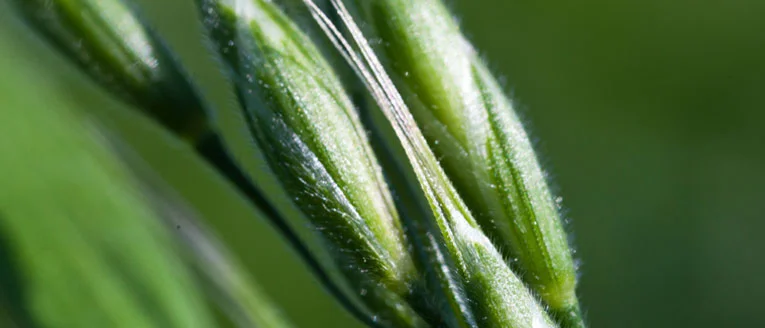
Use your eyes, hands and nose.
Good hay is soft to the touch, not stalky and sharp: a handful should squeeze and spring back. Colour runs pale‑green to gold, never grey or bleached white. And the smell tells you almost everything: sweet and meadowy is what you want; musty, sharp or mushroomy means walk away.
Soft haylage should smell clean and slightly tangy, with intact wrapping and no white mould pockets. Both should be low in dust: a bale that clouds when you shake it is trouble for sensitive lungs.
Clean, bright, dry and absorbent.
Bedding straw should look bright and golden, feel crisp and dry, and be free of dust and mould. Dust‑extracted straw and shavings are kinder to airways, well worth it on a busy yard.
Watch out for grey, damp or musty straw: it’s a sign of poor storage and it won’t absorb properly. Feed and hard mixes should smell fresh and grain‑sweet, run free (not clumped), and be well within date.
Four things a good bale should be.
Soft to the touch
Cut at leaf, not stalk. Squeeze a handful and it stays springy, not brittle.
Sweet to the nose
Fresh meadow smell, no hint of must, mould or vinegar.
Bright to the eye
Pale‑green to gold. Grey, white or dusty is a hard no.
Consistent
Bales in a batch should be alike: predictable weight and quality.
Even great forage can be spoiled by a bad barn.
- Off the ground. Stack on pallets or boards: concrete sweats and damp wicks up.
- Under cover. A barn, an open shed or a well‑tarped stack: whatever keeps the rain off.
- Air around it. Don’t jam stacks against walls; give them room to breathe.
- Wrapped haylage: keep it off the ground and in shade; tape punctures the same day or feed those bales out within the week.
- Trust your nose. Sweet and meadowy is good. Sharp, mouldy or vinegary means don’t feed it.
Use a reliable merchant and you skip the poor‑quality hay.
Buying forage privately is a lottery. One field looks great in the photo and arrives dusty; another is sound but the seller has no more when you run out. Hay varies cut‑to‑cut and field‑to‑field, and if you’re not there to sniff and squeeze every load, it’s easy to end up with something your animals won’t touch, or shouldn’t.
That’s the whole point of a merchant. By using a reliable one, you avoid poor‑quality hay: we’ve already done the looking, smelling and sorting, we store it properly, and we can keep you supplied consistently rather than leaving you chasing the next field. If you’ve a horse with metabolic issues and need a low‑sugar option, just say so and we can point you to a suitable batch and arrange a sample test.
Want us to pick the right load for you?
Tell us what you’re feeding and we’ll match you to the right forage or feed.