
Roughly 2% of bodyweight a day.
An average 500kg horse needs around 10kg of forage daily, more in winter when grass is short, less when summer pasture is plentiful. Split it across the day rather than dumping it all at once: little and often is gentler on the gut and slows down a fast eater.
- Sensitive lungs? Switch to haylage, or steam the hay.
- Easy keeper? Use a small‑hole haynet to slow intake.
- Metabolic issues? Ask us about a low‑sugar batch. We can arrange a sample test.
- Always introduce new forage gradually over 7–10 days.
Maintenance through to higher demand.
Daily intakes vary widely (weight, breed, body condition, weather, whether they’re in milk or growing) but as a starting figure: dry cows need around 12–14kg of good hay a day, ewes around 1.5–2kg.
- Round bales work well in feeders, with less waste than rolling out.
- Haylage can carry more nutrition for animals in higher demand.
- Always have clean water available alongside any forage.
- Watch the body condition, not the calendar.
Alpacas, goats, pigs, donkeys.
Most small‑livestock species do well on a base of meadow hay. Donkeys especially: rich, sugary haylage is generally too much for them and a coarser, lower‑energy meadow hay suits them better.
For alpacas and goats, look for leafy bales without too many stalks. Tell us what you’re feeding and we can usually source a batch that fits the bill.
Rabbits, guinea pigs, chickens.
Rabbits and guinea pigs need unlimited hay: it’s 80% of their diet, not a treat. Look for soft, leafy, sweet‑smelling bales. A small bale will keep one or two rabbits going for several months if stored well.
Chickens love hay as bedding and as a foraging substrate, especially in winter when grass is sparse.
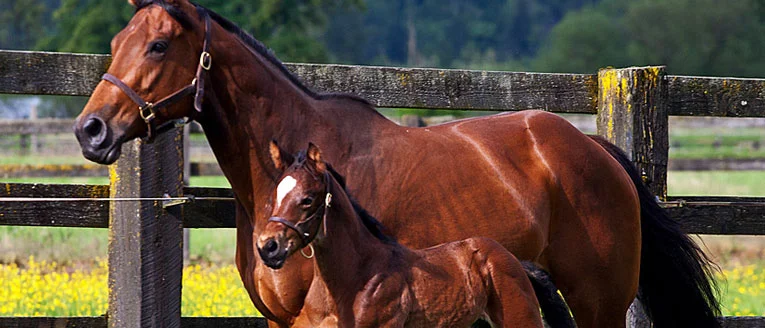
Go slow when you change the forage.
Horses and ruminants both have gut microbes that need time to adjust, so any change (hay to haylage, one batch to the next, or a new hard feed) is best made gradually over 7 to 10 days, mixing the new in with the old.
Because we source through a network of suppliers, we’ll always try to keep you on a consistent product, and when a change is unavoidable, we’ll flag it so you can transition smoothly.
Looking after the bales once they’re on your yard.
- Off the ground. Stack on pallets or boards: concrete sweats and damp wicks up.
- Under cover. A barn, an open shed, or a well‑tarped stack: whatever keeps the rain off.
- Air around it. Don’t pack stacks tight against walls; give them room to breathe.
- Wrapped haylage: off the ground, in shade where possible. Tape any punctures the same day or feed those bales out within the week.
- Check the smell. Sweet meadow good. Sharp, mouldy or vinegary, ring us. We’ll always look into it.
Not sure what to feed?
Tell us about your animals and we’ll help you pick the right product.